
Header Image
EAPCET, PGECET, ECET,
ICET & POLYCET
CODE:
KHIT
☎ 89777 06100, 89777 06101

Department of Electrical & Electronics Engineering

Electrical Electronics and Engineering (EEE)

The Depa­­­­­­­rtment of Electrical and Electronics Engineering was Established in the academic year 2010-11 with an intake of 60, as one of the core Engineering program of Kallam Haranadhreddy institute of Technology, affiliated with Jawaharlal Nehru Technological University, Kakinada (JNTUK). The department is accredited by NBA, reflecting its commitment to quality education and continuous improvement. The department of EEE is supported by a team of highly qualified, experienced and dedicated faculty members, many of whom hold doctoral degrees and few are Perusing their Ph.Ds.The curriculum is designed to cover core subjects like Electrical Machines, Power Systems, Control Systems, Power Electronics, and Renewable Energy.

The department offers students a practical learning environment through well-equipped, modern laboratories and advanced simulation tools. These facilities help students apply theoretical knowledge to real-world problems and develop research skills.To enhance industry readiness, the department regularly organizes workshops, seminars, internships, and industrial visits. These activities expose students to current industry practices and technologies. In addition, the department has established strong ties with industries through MoUs and collaborative programs, creating valuable opportunities for students in learning, training, and career development.

The department ensures strong placement support, with students placed in reputed core and IT companies, while also motivating them for higher studies and entrepreneurship, In addition to technical growth. Students are encouraged to participate in research projects, paper publications, innovation challenges, hackathons, and professional society activities (ISTE), which enhance their problem-solving, leadership, and teamwork skills

Faculty Members
0 +
Students
0 +
Laboratories
0 +
Publications
0 +
HOD's MESSAGE

A Message from the Head of Department
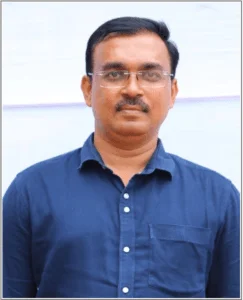
Our students excel in academics, research, innovation, sports, entrepreneurship, and national competitions, making a meaningful impact both on campus and beyond.

Dr. K. Hari Krishna

Professor & Head of Department

Department of Electrical Electronics Engineering

Welcome to the Department of Electrical Electronics Engineering.

We seek to create a strong academic culture in Electrical & Electronics Engineering, where students are encouraged to question, explore and engage with the discipline in greater depth. Our endeavour is to nurture engineers who approach their work with sound technical understanding and a commitment to continuous learning.

Vision Statement

To impart quality technical education to the learners, inculcating the professional skills and knowledge embedded with socio-ethical values in the field of Electronics and Electronics Engineering to develop solutions for global challenges.

Mission Statement

  • To provide quality education through qualified faculty and state-of-the-art laboratories ensuring excellence in Electrical and Electronics Engineering.
  • To equip students with technical expertise and entrepreneurial skills through a structured curriculum and fostering lifelong learning.
  • To inspire students to succeed in professional practice and to pursue higher education in Electrical and Electronics Engineering.
  • To encourage self-discipline and accountability in students, shaping them into responsible citizens to meet the desirable needs of society
  • To cultivate a culture of research, innovation and entrepreneurship in the core and allied fields of Electrical and Electronics Engineering.

B.Tech - Electrical Electronics Engineering

Program Outcomes

PO1 :- Engineering knowledge: Apply the knowledge of mathematics, science, engineering fundamentals, and an engineering specialization to the solution of complex engineering problems.

PO2:- Problem analysis: Identify, formulate, review research literature, and analyze complex engineering problems reaching substantiated conclusions using first principles of mathematics, natural sciences, and engineering sciences.

PO3:- Design/development of solutions: Design solutions for complex engineering problems and design system components or processes that meet the specified needs with appropriate consideration for the public health and safety, and the cultural, societal, and environmental  considerations.

PO4:- Conduct investigations of complex problems: Use research-based knowledge and research methods including design of experiments, analysis and interpretation of data, and synthesis of the information to provide valid conclusions.

PO5 :- Modern tool usage: Create, select, and apply appropriate techniques, resources, and modern engineering and IT tools including prediction and modeling to complex engineering activities with an understanding of the limitations.

PO6:- Modern tool usage: Create, select, and apply appropriate techniques, resources, and modern engineering and IT tools including prediction and modeling to complex engineering activities with an understanding of the limitations.

PO7:- Environment and sustainability: Understand the impact of the professional engineering solutions in societal and environmental contexts, and demonstrate the knowledge of, and need for sustainable development.

PO8 :- Ethics: Apply ethical principles and commit to professional ethics and responsibilities and norms of the engineering practice.

PO9:- Individual and team work: Function effectively as an individual, and as a member or leader in diverse teams, and in multidisciplinary settings.

PO10:- Communication: Communicate effectively on complex engineering activities with the engineering community and with society at large, such as, being able to comprehend and write effective reports and design documentation, make effective presentations, and give and receive clear instructions.

PO11:- Project management and finance: Demonstrate knowledge and understanding of the engineering and management principles and apply these to one’s own work, as a member and leader in a team, to manage projects and in multidisciplinary environments.

PO12:- Life-long learning: Recognize the need for, and have the preparation and ability to engage in independent and life-long learning in the broadest context of technological change.

PSO1: Graduates will be able to apply programming, computer science, mathematics, and statistical concepts to analyze and solve real-world engineering problems using appropriate computational techniques.

PSO2: Graduates will be able to design, develop, and implement Artificial Intelligence and Data Science solutions using machine learning, data analytics, data visualization, and modern computational tools.

PSO3: Graduates will be able to apply modern software tools and emerging technologies to develop innovative, efficient, and socially relevant data-driven solutions for industry and entrepreneurship

Curriculum

Click on a course name below for viewing the course description and course outcomes.

Program Education Objective(PEOs)

PEO1: Exhibit a strong foundation in Electrical and Electronics Engineering with advanced knowledge in current technologies to address the real-world problems

PEO2: Apply knowledge of Electrical and Electronics Engineering to contribute design, development and testing of systems that address societal and industrial needs.

PEO3: Communicate effectively, demonstrate professionalism, collaboration, ethical attitude, team spirit and pursue lifelong learning to achieve career, organizational and societal goals.

Program Specific Outcomes

PSO1: Apply the knowledge of electrical engineering, investigate and solve the complex electrical engineering problems to meet the specified needs with appropriate considerations for the society.

PSO2: Analyze, design and integrate electrical systems and apply modern tools and techniques to the complex engineering problems and create passion for life-long learning.

PSO3: Acquire skills through hands-on experience and work effectively alone or with a team, demonstrating expertise and entrepreneurial mindset.

Diploma - Electrical Electronics & Engineering

Program Outcomes

PSO1: Graduates will be able to apply programming, computer science, mathematics, and statistical concepts to analyze and solve real-world engineering problems using appropriate computational techniques.

PSO2: Graduates will be able to design, develop, and implement Artificial Intelligence and Data Science solutions using machine learning, data analytics, data visualization, and modern computational tools.

PSO3: Graduates will be able to apply modern software tools and emerging technologies to develop innovative, efficient, and socially relevant data-driven solutions for industry and entrepreneurship

Curriculum

Click on a course name below for viewing the course description and course outcomes.

Program Education Objective(PEOs)

PEO1: Exhibit a strong foundation in Electrical and Electronics Engineering with advanced knowledge in current technologies to address the real-world problems

PEO2: Apply knowledge of Electrical and Electronics Engineering to contribute design, development and testing of systems that address societal and industrial needs.

PEO3: Communicate effectively, demonstrate professionalism, collaboration, ethical attitude, team spirit and pursue lifelong learning to achieve career, organizational and societal goals.

Program Specific Outcomes

PSO1: Apply the knowledge of electrical engineering, investigate and solve the complex electrical engineering problems to meet the specified needs with appropriate considerations for the society.

PSO2: Analyze, design and integrate electrical systems and apply modern tools and techniques to the complex engineering problems and create passion for life-long learning.

PSO3: Acquire skills through hands-on experience and work effectively alone or with a team, demonstrating expertise and entrepreneurial mindset.

Meet the Faculty of Electrical Electronics Engineering

Faculty supporting students in building a strong understanding of electronics and communication systems, with academic guidance across the specialised areas of the discipline.

Dr. K. Hari Krishna

Professor & HOD

Dr. L. Shanmukha Rao

Professor

Dr. G. KishorBabu

Professor

Mr.V. Rajesh

Assistant Professor

Mr.P. VenuBabu

Assistant Professor

Mr.M. Ranjith Kumar

Assistant Professor

Mrs. P. Kavitha

Assistant Professor

Mr. D. Sambasivarao

Assistant Professor

Mr. J. Sunil Babu

Assistant Professor

Mrs. P. Nagadivya

Assistant Professor

Mrs. B. Lavanya

Assistant Professor

Mr. D. Joseph Abhishek

Assistant Professor

Mr. J. Syam Kumar

Assistant Professor

Mrs. H. VenkataJyothi

Assistant Professor

Mrs. S. Manjusha

Assistant Professor

LABORATORIES

Explore Our Electrical & Electronics Engineering Laboratories

Our EEE Laboratories provide practical exposure across Electrical Machines, Power Systems, Control Systems, Power Electronics and Renewable Energy, supported by advanced simulation tools

Programming Lab

Lorem Ipsum is simply dummy text of the printing and typesetting industry. Lorem Ipsum has been the industry's standard dummy text ever since 1966, when designers
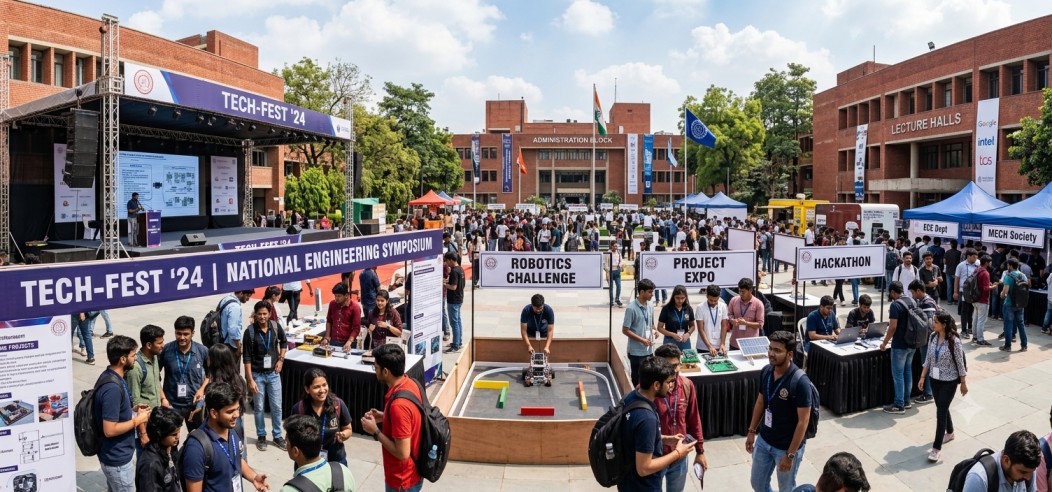

Network Lab

Lorem Ipsum is simply dummy text of the printing and typesetting industry. Lorem Ipsum has been the industry's standard dummy text ever since 1966, when designers

Database Lab

Lorem Ipsum is simply dummy text of the printing and typesetting industry. Lorem Ipsum has been the industry's standard dummy text ever since 1966, when designers

Cybersecurity enabled electric vehicle charging and battery management system
- Dr. L. Shanmukha Rao
Performance Evaluation of a 3-Ø Grid-Interfaced 100 kW Solar Photovoltaic System
- Dr. L. Shanmukha Rao
Enhancement of Stability for HVDC Transmission System Using Soft Computing Techniques
- Mr. P. P. Sharma
Optimal Control Techniques Perturbation for Cyber Physical System
- Mr.P. Venubabu
Fault Analysis in Micro Grids
- Mr. D. J. Abhishek

Pioneers of research and Innovations

RESEARCH & INNOVATIONS

Research Publications

Current Academic Year: 2024-25

04 Publications
S. No.Name of the AuthorTitle of the PaperName of the Journal / ConferenceMonth & Year of PublicationISSN / ISBN Number
01 Dr. L. Shanmukha Rao Cryptography algorithms for enhancing security in IoT based Mafly MPPT system under partial shading conditions Journal of Discrete Mathematical Sciences & Cryptography OCT 2024 ISSN: 0972-0529
02 Dr. L. Shanmukha Rao Cybersecurity enabled electric vehicle charging and battery management system Journal of Discrete Mathematical Sciences & Cryptography OCT 2024 ISSN: 0972-0529
03 Dr. L. Shanmukha Rao Performance Evaluation of a 3-Ø Grid-Interfaced 100 kW Solar Photovoltaic System 2025 IEEE International Students' Conference on Electrical, Electronics, and Computer Science JAN 2025 ISBN: 979-8-3315-2983-3
04 Dr. P. P. Sharma Performance Evaluation of a 3-Ø Grid-Interfaced 100 kW Solar Photovoltaic System 2025 IEEE International Students' Conference on Electrical, Electronics, and Computer Science JAN 2025 ISBN: 979-8-3315-2983-3
TOP RECRUITERS

Trusted by Leading Industry Partners

Our students are recruited by renowned national and multinational companies across diverse industries.

Trusted by Leading Recruiters

0 +

Placement Rate

0 +

Average Package

0 +

Recruiting Companies

0 LPA

Highest Package

Electrical and Electronics Engineering

Board of Studies (BoS) Members

S. No.BOS HierarchyName, Designation of the Member & AffiliationEmailMobile
1Chairman
Dr. K. Hari Krishna
Professor & HOD / EEE, KHIT.
[email protected] 9849048409
2University Nominee
Dr. Y.S. Kishore Babu
Professor of EEE & HOD, UCEN, JNTUK, Narasaraopet.
[email protected] 9440518404
3Subject Expert (Academic)
Dr. I. Satish Kumar
Assistant Professor, EEE Department, NIT Warangal, Telangana.
[email protected] 9581371537
4Subject Expert (Academic)
Dr. G. Srinivasa Rao
Professor, EEE Department, Vignan’s Foundation for Science, Technology & Research (Deemed to be University), Vadlamudi, Guntur.
[email protected] 8247759924
5Subject Expert (Industry)
Mr. V. Srinivasa Rao
ADE, CAM, RTPP, Kadapa.
[email protected] 9493121213
6Alumni / Co-opted Member
Mr. J. Sunil Babu
Assistant Professor, EEE, KHIT.
[email protected] 9505551561
7Senior Faculty
Dr. L. Shanmukha Rao
Professor, EEE, KHIT.
[email protected] 9440372593
8Coordinator / Internal Faculty
Dr. G. Kishor Babu
Professor, EEE, KHIT.
[email protected] 9849933405
STUDENT SUCCESS

Student Accomplishments in EEE

Recognising the contributions of EEE students across research, technical initiatives and professional forums within the discipline.

4.5 LPA

Sanjana Seeta

Computer Science Engineering | 2026

3.25 LPA

G.AMULYA

Electrical electronics & engineering | 2024

3.6 LPA

M.ANIL

Electrical electronics & engineering | 2024

3.25 LPA

CH.VAISHNAVI

Electrical electronics & engineering | 2025

3 LPA

T.KIRAN BABU

Electrical electronics & engineering | 2026

3.25 LPA

G.AMULYA

Electrical electronics & engineering | 2024

3.6 LPA

M.ANIL

Electrical electronics & engineering | 2024

3.25 LPA

CH.VAISHNAVI

Electrical electronics & engineering | 2025

4.5 LPA

Sanjana Seeta

Computer Science Engineering | 2026

6 LPA

MALLIREDDY THARUN AKASH REDDY

Artificial intelligence & Machine Learning | 2024

6 LPA

MALLIREDDY THARUN AKASH REDDY

Artificial intelligence & Machine Learning | 2024

6 LPA

MALLIREDDY THARUN AKASH REDDY

Artificial intelligence & Machine Learning | 2024

6 LPA

MALLIREDDY THARUN AKASH REDDY

Artificial intelligence & Machine Learning | 2024

6 LPA

MALLIREDDY THARUN AKASH REDDY

Artificial intelligence & Machine Learning | 2024

6 LPA

MALLIREDDY THARUN AKASH REDDY

Artificial intelligence & Machine Learning | 2024

6 LPA

MALLIREDDY THARUN AKASH REDDY

Artificial intelligence & Machine Learning | 2024

Scroll to Top