
M.Tech - Advanced Engineering Specializations
Master of Technology
Duration: 2 Years (4 Semesters)
The Department of Master of Technology at KHIT focuses on building a strong foundation in computer applications, progressing from fundamental concepts to developments in modern computing. The department combines academic learning with research and practical exposure, supported by dedicated laboratories and computing facilities.
Students have access to dedicated laboratories, a Computer Centre, Research Centre and Project Lab to support academic and project work. MCA students have also secured campus placements in MNCs and admissions to renowned foreign universities for higher studies.
Related programs
B.Tech. (CSE) - Artificial Intelligence and Data Analytics
B.Tech. (CSE) - Artificial Intelligence and Data Analytics
B.Tech. (CSE) - Artificial Intelligence and Data Analytics

B.Tech. (CSE) - Artificial Intelligence and Data Analytics
B.Tech. (CSE) - Artificial Intelligence and Data Analytics
B.Tech. (CSE) - Artificial Intelligence and Data Analytics
B.Tech. (CSE) - Artificial Intelligence and Data Analytics
B.Tech. (CSE) - Artificial Intelligence and Data Analytics
HOD's MESSAGE
A Message from the Head of Department
Our students excel in academics, research, innovation, sports, entrepreneurship, and national competitions, making a meaningful impact both on campus and beyond.

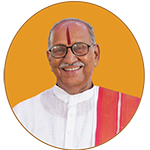
Dr.XXXXXXXXXX
Professor & Head of Department
Department of Master Of Technology
Welcome to the Master Of Technology. Imparting quality technical education to students in the field of Computer Science and Engineering to produce technically competent software and hardware personnel with advanced skills, knowledge and behavior to meet the computational global real time challenges.
Vision
To be a globally recognized school through excellence in teaching, learning and research for creating Computer Science professionals, leaders and entrepreneurs of the future contributing to society and industry for sustainable growth.
Mission
- To achieve academic excellence through innovative teaching and learning methodologies in the area of computer science and engineering.
- To develop problem solving skills in students so they contribute to society.
- To educate students to be life-long learners and successful leaders who contribute to the economic growth of the nation.
- To prepare the aspirants for Employability, Entrepreneurship and for higher education.
Curriculum
Engineering Minors
A set of 4 to 6 elective courses in engineering to enhance competency in the technical and/or emerging domain. (e.g for electronic and electrical- students taking courses in automobile/ robotics/ cybersecurity to build competency in this area.)
Open Minors
A set of four elective courses outside the discipline to develop additional skills. Courses can be selected from professional enhancement, management, Animation, photography, humanities, and other fields not related to the core discipline of the program.
Click on a course name below for viewing the course description and course outcomes.
Autumn term
BASIC ELECTRICAL AND ELECTRONICS ENGINEERING
Introduction of the fundamental concepts of electricity and electronics that involve direct current, alternating current, series and parallel resistive circuits, inductance, capacitance, transformers, motors, electronic components, and various types of test equipment found in industry. This course also covers the digital circuits like combinational and sequential logic circuits
Course Outcomes: Through this course students should be able to
- Understand the workings of various semiconductor devices and analyze their applications.
- Familiar to configure arduino board and sensor module for making application oriented project
- Examine various number systems and their application in digital circuits.
- Analyze combinational circuits with applications specific integrated circuits
- Evaluate sequential circuits with flip-flops and ICs for various applications
- Create skill-oriented projects with features and ergonomics.
BASIC ELECTRICAL AND ELECTRONICS ENGINEERING LABORATORY
Gain practical exposure through performing experiments related to basic concepts of electronics and Electrical Engineering in this lab and develop skills in circuit formulation and obtaining the desired output results.
Course Outcomes: Through this course students should be able to
- assemble various measuring instruments and electronic components on the breadboard and create circuit connections.
- validate the functionality of various digital & analogue ICs
- use basic measuring instruments and component specific ratings related to Electronics Engineering
- design applications and analyze combinational and sequential circuits.
- communicate and contribute effectively as an individual and as a member of a team in a project
- build applications with at least one sensor module by programming Microcontroller board.
ENGINEERING PHYSICS
The engineering physics program focuses on the foundations of modern technology. The program prepares students for research, development and entrepreneurial careers in many frontier areas of engineering.
Course Outcomes: Through this course students should be able to
- understand the basic principles of physics to lay the foundation for various engineering courses.
- explain the principle and working of lasers and optical fiber for their wide applications.
- employ the principle of quantum mechanics to solve Schrodinger equations for standard systems.
- articulate the physics of solids to understand their properties.
- determine the properties of engineering materials.
INTERNET PROGRAMMING LABORATORY
Introduces web programming principles that relate to web design and emphasize on designing the effective web pages with the help of CSS which will help in designing professional web pages and flow of the data between web pages.
Course Outcomes: Through this course students should be able to
- understand the structure and semantics of HTML5 to create well-formed web pages.
- apply HTML elements to build pages with links, images, and embedded media to design user-friendly and content-rich websites.
- create responsive layouts using CSS, including Flexbox and Grid.
- construct and style tables , implementing forms controls and apply css to enhance the layout and functionality of web forms
- apply JavaScript to add logic, control flow, and interactivity to web pages
- manipulate the DOM and handle events for dynamic content updates and validation.
MATHEMATICS FOR ENGINEERS
This course deals with the basic tools of Mathematics required for all branches of Engineering.
Course Outcomes: Through this course students should be able to
- recall the concepts of matrices and its application to solve the system of linear equations.
- review the basic concept of calculus of one variable that are essential in most branches of engineering.
- identify the fallouts of Rolls theorem, significance of the Mean Value and other applications where calculus is useful.
- apply the concept of multi-variable differential calculus for solving the problems in the field of sciences and engineering.
- compute the surface and volume integral using various concepts of multi-variable integral calculus.
- understand the elementary notions of Fourier series for harmonic analysis.
ORIENTATION TO COMPUTING-I
This course covers the fundamentals of computer science. These fundamentals form the foundation for additional field-specific core courses.
Course Outcomes: Through this course students should be able to
- understand the various functional components and basic structure of a computer system
- explain operating system and its functions, directory hierarchy, kernel types and basic of computer languages
- describe Linux OS features, shell commands, virtual machine concepts and file management system
- analyze cohorts and pathways based on skillsets and explore MOOC platforms for professional growth
- understand network and its components, also identify security issues effectively
- utilize Git, GitHub, AI tools, and professional platforms to enhance technical skills with ethical digital practices
PYTHON PROGRAMMING
The major focus of the course is building strong logical skills with ease of programming. Course contents include detailed study of fundamentals of Python programming – language basics, operators, control structures, using and writing functions, data structures and classes in Python
Course Outcomes: Through this course students should be able to
- describe the installation of python environment and basics of Python language
- apply the conditional and iterative statements for evaluating the appropriate alternates
- explore functions, including recursion, with parameters and arguments in Python.
- construct the core data structures like lists, dictionaries, tuples and sets in Python to store, process and sort the data
- apply the concepts of Object-oriented programming as used in Python using encapsulation, polymorphism, and inheritance.
- examine file handling operations and effectively apply regular expressions for pattern matching.
Spring Term
COMPUTER PROGRAMMING
DATABASE MANAGEMENT SYSTEMS
DIFFERENTIAL EQUATIONS AND VECTOR CALCULUS
ENGINEERING DRAWING WITH AUTOCAD
ENVIRONMENTAL STUDIES
LANGUAGE ELECTIVE 1
ORIENTATION TO COMPUTING-II
SOFTWARE ENGINEERING
Autumn term
BASIC ELECTRICAL AND ELECTRONICS ENGINEERING
Introduction of the fundamental concepts of electricity and electronics that involve direct current, alternating current, series and parallel resistive circuits, inductance, capacitance, transformers, motors, electronic components, and various types of test equipment found in industry. This course also covers the digital circuits like combinational and sequential logic circuits
Course Outcomes: Through this course students should be able to
- Understand the workings of various semiconductor devices and analyze their applications.
- Familiar to configure arduino board and sensor module for making application oriented project
- Examine various number systems and their application in digital circuits.
- Analyze combinational circuits with applications specific integrated circuits
- Evaluate sequential circuits with flip-flops and ICs for various applications
- Create skill-oriented projects with features and ergonomics.
BASIC ELECTRICAL AND ELECTRONICS ENGINEERING LABORATORY
Gain practical exposure through performing experiments related to basic concepts of electronics and Electrical Engineering in this lab and develop skills in circuit formulation and obtaining the desired output results.
Course Outcomes: Through this course students should be able to
- assemble various measuring instruments and electronic components on the breadboard and create circuit connections.
- validate the functionality of various digital & analogue ICs
- use basic measuring instruments and component specific ratings related to Electronics Engineering
- design applications and analyze combinational and sequential circuits.
- communicate and contribute effectively as an individual and as a member of a team in a project
- build applications with at least one sensor module by programming Microcontroller board.
ENGINEERING PHYSICS
The engineering physics program focuses on the foundations of modern technology. The program prepares students for research, development and entrepreneurial careers in many frontier areas of engineering.
Course Outcomes: Through this course students should be able to
- understand the basic principles of physics to lay the foundation for various engineering courses.
- explain the principle and working of lasers and optical fiber for their wide applications.
- employ the principle of quantum mechanics to solve Schrodinger equations for standard systems.
- articulate the physics of solids to understand their properties.
- determine the properties of engineering materials.
INTERNET PROGRAMMING LABORATORY
Introduces web programming principles that relate to web design and emphasize on designing the effective web pages with the help of CSS which will help in designing professional web pages and flow of the data between web pages.
Course Outcomes: Through this course students should be able to
- understand the structure and semantics of HTML5 to create well-formed web pages.
- apply HTML elements to build pages with links, images, and embedded media to design user-friendly and content-rich websites.
- create responsive layouts using CSS, including Flexbox and Grid.
- construct and style tables , implementing forms controls and apply css to enhance the layout and functionality of web forms
- apply JavaScript to add logic, control flow, and interactivity to web pages
- manipulate the DOM and handle events for dynamic content updates and validation.
MATHEMATICS FOR ENGINEERS
This course deals with the basic tools of Mathematics required for all branches of Engineering.
Course Outcomes: Through this course students should be able to
- recall the concepts of matrices and its application to solve the system of linear equations.
- review the basic concept of calculus of one variable that are essential in most branches of engineering.
- identify the fallouts of Rolls theorem, significance of the Mean Value and other applications where calculus is useful.
- apply the concept of multi-variable differential calculus for solving the problems in the field of sciences and engineering.
- compute the surface and volume integral using various concepts of multi-variable integral calculus.
- understand the elementary notions of Fourier series for harmonic analysis.
ORIENTATION TO COMPUTING-I
This course covers the fundamentals of computer science. These fundamentals form the foundation for additional field-specific core courses.
Course Outcomes: Through this course students should be able to
- understand the various functional components and basic structure of a computer system
- explain operating system and its functions, directory hierarchy, kernel types and basic of computer languages
- describe Linux OS features, shell commands, virtual machine concepts and file management system
- analyze cohorts and pathways based on skillsets and explore MOOC platforms for professional growth
- understand network and its components, also identify security issues effectively
- utilize Git, GitHub, AI tools, and professional platforms to enhance technical skills with ethical digital practices
PYTHON PROGRAMMING
The major focus of the course is building strong logical skills with ease of programming. Course contents include detailed study of fundamentals of Python programming – language basics, operators, control structures, using and writing functions, data structures and classes in Python
Course Outcomes: Through this course students should be able to
- describe the installation of python environment and basics of Python language
- apply the conditional and iterative statements for evaluating the appropriate alternates
- explore functions, including recursion, with parameters and arguments in Python.
- construct the core data structures like lists, dictionaries, tuples and sets in Python to store, process and sort the data
- apply the concepts of Object-oriented programming as used in Python using encapsulation, polymorphism, and inheritance.
- examine file handling operations and effectively apply regular expressions for pattern matching.
Spring Term
COMPUTER PROGRAMMING
DATABASE MANAGEMENT SYSTEMS
DIFFERENTIAL EQUATIONS AND VECTOR CALCULUS
ENGINEERING DRAWING WITH AUTOCAD
ENVIRONMENTAL STUDIES
LANGUAGE ELECTIVE 1
ORIENTATION TO COMPUTING-II
SOFTWARE ENGINEERING
Autumn term
BASIC ELECTRICAL AND ELECTRONICS ENGINEERING
Introduction of the fundamental concepts of electricity and electronics that involve direct current, alternating current, series and parallel resistive circuits, inductance, capacitance, transformers, motors, electronic components, and various types of test equipment found in industry. This course also covers the digital circuits like combinational and sequential logic circuits
Course Outcomes: Through this course students should be able to
- Understand the workings of various semiconductor devices and analyze their applications.
- Familiar to configure arduino board and sensor module for making application oriented project
- Examine various number systems and their application in digital circuits.
- Analyze combinational circuits with applications specific integrated circuits
- Evaluate sequential circuits with flip-flops and ICs for various applications
- Create skill-oriented projects with features and ergonomics.
BASIC ELECTRICAL AND ELECTRONICS ENGINEERING LABORATORY
Gain practical exposure through performing experiments related to basic concepts of electronics and Electrical Engineering in this lab and develop skills in circuit formulation and obtaining the desired output results.
Course Outcomes: Through this course students should be able to
- assemble various measuring instruments and electronic components on the breadboard and create circuit connections.
- validate the functionality of various digital & analogue ICs
- use basic measuring instruments and component specific ratings related to Electronics Engineering
- design applications and analyze combinational and sequential circuits.
- communicate and contribute effectively as an individual and as a member of a team in a project
- build applications with at least one sensor module by programming Microcontroller board.
ENGINEERING PHYSICS
The engineering physics program focuses on the foundations of modern technology. The program prepares students for research, development and entrepreneurial careers in many frontier areas of engineering.
Course Outcomes: Through this course students should be able to
- understand the basic principles of physics to lay the foundation for various engineering courses.
- explain the principle and working of lasers and optical fiber for their wide applications.
- employ the principle of quantum mechanics to solve Schrodinger equations for standard systems.
- articulate the physics of solids to understand their properties.
- determine the properties of engineering materials.
INTERNET PROGRAMMING LABORATORY
Introduces web programming principles that relate to web design and emphasize on designing the effective web pages with the help of CSS which will help in designing professional web pages and flow of the data between web pages.
Course Outcomes: Through this course students should be able to
- understand the structure and semantics of HTML5 to create well-formed web pages.
- apply HTML elements to build pages with links, images, and embedded media to design user-friendly and content-rich websites.
- create responsive layouts using CSS, including Flexbox and Grid.
- construct and style tables , implementing forms controls and apply css to enhance the layout and functionality of web forms
- apply JavaScript to add logic, control flow, and interactivity to web pages
- manipulate the DOM and handle events for dynamic content updates and validation.
MATHEMATICS FOR ENGINEERS
This course deals with the basic tools of Mathematics required for all branches of Engineering.
Course Outcomes: Through this course students should be able to
- recall the concepts of matrices and its application to solve the system of linear equations.
- review the basic concept of calculus of one variable that are essential in most branches of engineering.
- identify the fallouts of Rolls theorem, significance of the Mean Value and other applications where calculus is useful.
- apply the concept of multi-variable differential calculus for solving the problems in the field of sciences and engineering.
- compute the surface and volume integral using various concepts of multi-variable integral calculus.
- understand the elementary notions of Fourier series for harmonic analysis.
ORIENTATION TO COMPUTING-I
This course covers the fundamentals of computer science. These fundamentals form the foundation for additional field-specific core courses.
Course Outcomes: Through this course students should be able to
- understand the various functional components and basic structure of a computer system
- explain operating system and its functions, directory hierarchy, kernel types and basic of computer languages
- describe Linux OS features, shell commands, virtual machine concepts and file management system
- analyze cohorts and pathways based on skillsets and explore MOOC platforms for professional growth
- understand network and its components, also identify security issues effectively
- utilize Git, GitHub, AI tools, and professional platforms to enhance technical skills with ethical digital practices
PYTHON PROGRAMMING
The major focus of the course is building strong logical skills with ease of programming. Course contents include detailed study of fundamentals of Python programming – language basics, operators, control structures, using and writing functions, data structures and classes in Python
Course Outcomes: Through this course students should be able to
- describe the installation of python environment and basics of Python language
- apply the conditional and iterative statements for evaluating the appropriate alternates
- explore functions, including recursion, with parameters and arguments in Python.
- construct the core data structures like lists, dictionaries, tuples and sets in Python to store, process and sort the data
- apply the concepts of Object-oriented programming as used in Python using encapsulation, polymorphism, and inheritance.
- examine file handling operations and effectively apply regular expressions for pattern matching.
Spring Term
COMPUTER PROGRAMMING
DATABASE MANAGEMENT SYSTEMS
DIFFERENTIAL EQUATIONS AND VECTOR CALCULUS
ENGINEERING DRAWING WITH AUTOCAD
ENVIRONMENTAL STUDIES
LANGUAGE ELECTIVE 1
ORIENTATION TO COMPUTING-II
SOFTWARE ENGINEERING
Autumn term
BASIC ELECTRICAL AND ELECTRONICS ENGINEERING
Introduction of the fundamental concepts of electricity and electronics that involve direct current, alternating current, series and parallel resistive circuits, inductance, capacitance, transformers, motors, electronic components, and various types of test equipment found in industry. This course also covers the digital circuits like combinational and sequential logic circuits
Course Outcomes: Through this course students should be able to
- Understand the workings of various semiconductor devices and analyze their applications.
- Familiar to configure arduino board and sensor module for making application oriented project
- Examine various number systems and their application in digital circuits.
- Analyze combinational circuits with applications specific integrated circuits
- Evaluate sequential circuits with flip-flops and ICs for various applications
- Create skill-oriented projects with features and ergonomics.
BASIC ELECTRICAL AND ELECTRONICS ENGINEERING LABORATORY
Gain practical exposure through performing experiments related to basic concepts of electronics and Electrical Engineering in this lab and develop skills in circuit formulation and obtaining the desired output results.
Course Outcomes: Through this course students should be able to
- assemble various measuring instruments and electronic components on the breadboard and create circuit connections.
- validate the functionality of various digital & analogue ICs
- use basic measuring instruments and component specific ratings related to Electronics Engineering
- design applications and analyze combinational and sequential circuits.
- communicate and contribute effectively as an individual and as a member of a team in a project
- build applications with at least one sensor module by programming Microcontroller board.
ENGINEERING PHYSICS
The engineering physics program focuses on the foundations of modern technology. The program prepares students for research, development and entrepreneurial careers in many frontier areas of engineering.
Course Outcomes: Through this course students should be able to
- understand the basic principles of physics to lay the foundation for various engineering courses.
- explain the principle and working of lasers and optical fiber for their wide applications.
- employ the principle of quantum mechanics to solve Schrodinger equations for standard systems.
- articulate the physics of solids to understand their properties.
- determine the properties of engineering materials.
INTERNET PROGRAMMING LABORATORY
Introduces web programming principles that relate to web design and emphasize on designing the effective web pages with the help of CSS which will help in designing professional web pages and flow of the data between web pages.
Course Outcomes: Through this course students should be able to
- understand the structure and semantics of HTML5 to create well-formed web pages.
- apply HTML elements to build pages with links, images, and embedded media to design user-friendly and content-rich websites.
- create responsive layouts using CSS, including Flexbox and Grid.
- construct and style tables , implementing forms controls and apply css to enhance the layout and functionality of web forms
- apply JavaScript to add logic, control flow, and interactivity to web pages
- manipulate the DOM and handle events for dynamic content updates and validation.
MATHEMATICS FOR ENGINEERS
This course deals with the basic tools of Mathematics required for all branches of Engineering.
Course Outcomes: Through this course students should be able to
- recall the concepts of matrices and its application to solve the system of linear equations.
- review the basic concept of calculus of one variable that are essential in most branches of engineering.
- identify the fallouts of Rolls theorem, significance of the Mean Value and other applications where calculus is useful.
- apply the concept of multi-variable differential calculus for solving the problems in the field of sciences and engineering.
- compute the surface and volume integral using various concepts of multi-variable integral calculus.
- understand the elementary notions of Fourier series for harmonic analysis.
ORIENTATION TO COMPUTING-I
This course covers the fundamentals of computer science. These fundamentals form the foundation for additional field-specific core courses.
Course Outcomes: Through this course students should be able to
- understand the various functional components and basic structure of a computer system
- explain operating system and its functions, directory hierarchy, kernel types and basic of computer languages
- describe Linux OS features, shell commands, virtual machine concepts and file management system
- analyze cohorts and pathways based on skillsets and explore MOOC platforms for professional growth
- understand network and its components, also identify security issues effectively
- utilize Git, GitHub, AI tools, and professional platforms to enhance technical skills with ethical digital practices
PYTHON PROGRAMMING
The major focus of the course is building strong logical skills with ease of programming. Course contents include detailed study of fundamentals of Python programming – language basics, operators, control structures, using and writing functions, data structures and classes in Python
Course Outcomes: Through this course students should be able to
- describe the installation of python environment and basics of Python language
- apply the conditional and iterative statements for evaluating the appropriate alternates
- explore functions, including recursion, with parameters and arguments in Python.
- construct the core data structures like lists, dictionaries, tuples and sets in Python to store, process and sort the data
- apply the concepts of Object-oriented programming as used in Python using encapsulation, polymorphism, and inheritance.
- examine file handling operations and effectively apply regular expressions for pattern matching.
Spring Term
COMPUTER PROGRAMMING
DATABASE MANAGEMENT SYSTEMS
DIFFERENTIAL EQUATIONS AND VECTOR CALCULUS
ENGINEERING DRAWING WITH AUTOCAD
ENVIRONMENTAL STUDIES
LANGUAGE ELECTIVE 1
ORIENTATION TO COMPUTING-II
SOFTWARE ENGINEERING
Electives offered in Curriculum
Engineering Minors
- APPLIED ARTIFICIAL INTELLIGENCE SYSTEMS
This course covers advanced AI topics including reinforcement learning, recommender systems, explainable and responsible AI, federated learning, graph-based AI, and MLOps. It equips learners with skills to design, deploy, and govern scalable, ethical, and production-ready AI systems for real-world applications.
- APPLIED MACHINE LEARNING
This course provides an in-depth study of machine learning theory and algorithms, covering classification, regression, ensemble, unsupervised, and anomaly detection techniques. Emphasis is placed on statistical learning foundations, model evaluation, and hyperparameter tuning to develop robust, scalable models for real-world applications.
- DEEP LEARNING FOR COMPUTER VISION
This course covers foundations and advanced topics in computer vision and deep learning, including CNNs, transfer learning, object detection, segmentation, vision transformers, and generative vision models. Students gain practical skills to design, train, and evaluate state-of-the-art vision systems for real-world AI applications.
- DEEP LEARNING FOR NATURAL LANGUAGE PROCESSING
This course provides a comprehensive foundation in Natural Language Processing, covering text preprocessing, embeddings, sequence models, attention, transformers, and large language models. Students learn to build, fine-tune, and evaluate modern NLP and generative systems for real-world language understanding and text generation tasks.
- FOUNDATIONS OF MACHINE LEARNING
This course builds strong foundations in machine learning by covering core concepts, mathematical principles, data handling, visualization, exploratory data analysis, optimization, and feature engineering. It equips learners with practical skills using Python libraries to preprocess data, analyze patterns, and prepare datasets for effective machine learning models.
- LARGE LANGUAGE MODELS AND AGENTIC AI
This course introduces Large Language Models and Agentic AI, covering transformers, prompt engineering, fine-tuning, retrieval-augmented generation, and multi-agent systems. It emphasizes building, evaluating, and safely deploying autonomous LLM-driven agents for real-world automation, reasoning, and decision-support applications.
Open Minors
A set of four elective courses outside the discipline to develop additional skills. Courses can be selected from professional enhancement, management, Animation, photography, humanities, and other fields not related to the core discipline of the program.
Industry Interface
Tie ups with industry
- Content delivery by industry experts
- Projects in collaboration with industry
- Internships to engage deeply in hands on real-life situations
Meet the Faculty of Master of Technology
Faculty supporting a strong academic environment through focused instruction, research engagement and guidance in the field of Computer Applications.
Dr.Md.Umar Khan
Assistant Professor, MCA
Mrs.Ch.Manjula Deepthi
Assistant Professor, MCA
Mrs.Lakshmi
Assistant Professor, MCA
Mrs.K.Bhavani
Assistant Professor, MCA
Mr. N.Ruparani
Assistant Professor, MCA
Mr.Th.Harinadh
Assistant Professor, MCA
Mr.K.Koteswara Rao
Assistant Professor, MCA
U.Sai Ramy
Assistant Professor, MCA
Mr.L.Ramesh Babu
Assistant Professor, MCA
LABORATORIES
Explore Our Laboratories
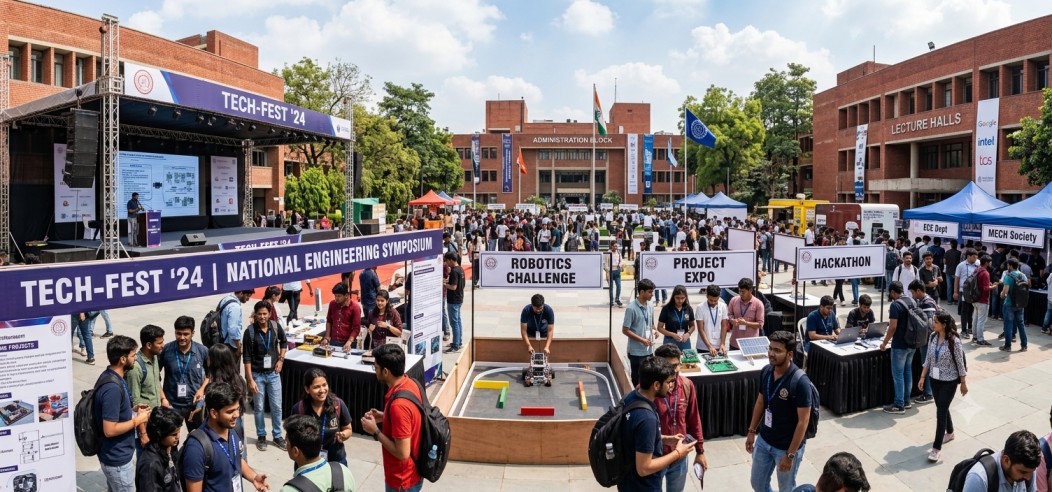
Dedicated laboratories, along with a Computer Centre, Research Centre and Project Lab, provide facilities that support students’ academic, research and project work.

Programming Lab
Lorem Ipsum is simply dummy text of the printing and typesetting industry. Lorem Ipsum has been the industry's standard dummy text ever since 1966, when designers
Network Lab
Lorem Ipsum is simply dummy text of the printing and typesetting industry. Lorem Ipsum has been the industry's standard dummy text ever since 1966, when designers

Database Lab
Lorem Ipsum is simply dummy text of the printing and typesetting industry. Lorem Ipsum has been the industry's standard dummy text ever since 1966, when designers
Pioneers of research and Innovations
Research
TOP RECRUITERS
Trusted by Leading Industry Partners
Our students are recruited by renowned national and multinational companies across diverse industries.
Trusted by Leading Recruiters














Placement Rate
Placement Officers
Recruiting Companies
Highest Package
carrer guidance
Mock Interviews
internship opertunities
industry training
STUDENT SUCCESS
Student Achievements
Celebrating the academic, technical and professional accomplishments of MCA students throughout their journey at KHIT.

4.5 LPA
Sanjana Seeta
Computer Science Engineering | 2026
6 LPA
MALLIREDDY THARUN AKASH REDDY
Artificial intelligence & Machine Learning | 2024
6 LPA
MALLIREDDY THARUN AKASH REDDY
Artificial intelligence & Machine Learning | 2024
6 LPA
MALLIREDDY THARUN AKASH REDDY
Artificial intelligence & Machine Learning | 2024
6 LPA
MALLIREDDY THARUN AKASH REDDY
Artificial intelligence & Machine Learning | 2024
6 LPA
MALLIREDDY THARUN AKASH REDDY
Artificial intelligence & Machine Learning | 2024
6 LPA
MALLIREDDY THARUN AKASH REDDY
Artificial intelligence & Machine Learning | 2024
6 LPA
MALLIREDDY THARUN AKASH REDDY
Artificial intelligence & Machine Learning | 2024
4.5 LPA
Sanjana Seeta
Computer Science Engineering | 2026
6 LPA
MALLIREDDY THARUN AKASH REDDY
Artificial intelligence & Machine Learning | 2024
6 LPA
MALLIREDDY THARUN AKASH REDDY
Artificial intelligence & Machine Learning | 2024
6 LPA
MALLIREDDY THARUN AKASH REDDY
Artificial intelligence & Machine Learning | 2024
6 LPA
MALLIREDDY THARUN AKASH REDDY
Artificial intelligence & Machine Learning | 2024
6 LPA
MALLIREDDY THARUN AKASH REDDY
Artificial intelligence & Machine Learning | 2024
6 LPA
MALLIREDDY THARUN AKASH REDDY
Artificial intelligence & Machine Learning | 2024
6 LPA
MALLIREDDY THARUN AKASH REDDY
Artificial intelligence & Machine Learning | 2024